
What is Green Burial?
Green burial and natural burial are terms often used interchangeably to describe burial processes that prioritize simplicity, sustainability and the preservation of native ecosystems. To be more specific though, natural burial better describes the actual burial process - returning the body to the earth in its most natural state - while green burial refers to the further step of re-greening or restoring a site after burial with native flora.
Unlike conventional burials which use non-biodegradable materials and toxic chemicals, natural burials only use earth-friendly materials. There is no embalming, no caskets made with exotic woods and metals, no synthetic fibres, and no concrete vaults; natural burial embraces the use of biodegradable materials like wicker or pine coffins and natural fibre shrouds. These materials decompose over time with the body, gently merging with the earth.
The use of community memorialization or small burial markers sourced locally are also ways that green burial sites mitigate environmental impact. By choosing green burial, families actively reduce their carbon footprint and contribute to the conservation and health of water, soil and other natural resources.
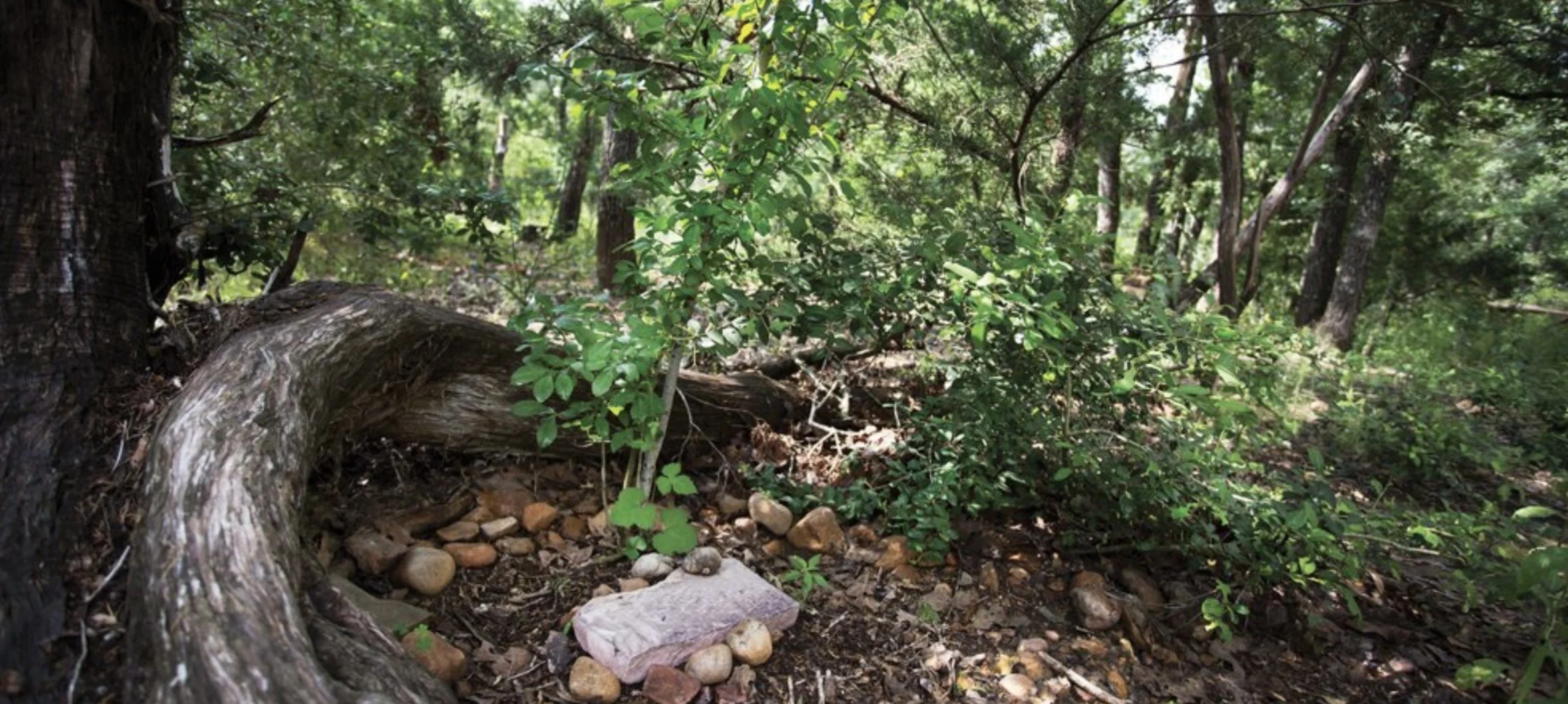
Green burial sites are different from the common image of cemeteries most of us carry. They are often established in natural areas such as meadows or woodlands and don’t generally incorporate headstones or the manicured landscaping of conventional cemeteries; The land is rewilded with native species and care is taken to eliminate any species that might be invasive. In some locations, Denman Island for example, their green cemetery is repopulating an area that was clear cut in the late 1990’s with indigenous plants and trees. In other locations, like Salt Spring Island, burials are placed in natural clearings of an existing forest. Returning or maintaining the landscape to a natural state is an important principle of green burial.
By choosing natural burial and supporting green burial spaces, individuals acknowledge their role in protecting the environment even beyond their own lifetime. This heartfelt choice not only provides peace of mind but also serves as a powerful legacy of sustainable values and responsible stewardship. The conservation and restoration of these natural landscapes ensure that future generations can enjoy the beauty and tranquility they provide.
What About Cremation?
Many people choose cremation because it is more affordable than conventional burial and because they believe it the most environmentally responsible option. Until 2008, when Canada’s first urban green burial site was established in BC, cremation was the green choice. In Canada, the cremation rate rose from 48% in 2000 to 72% in 2018.
Advancements in cremation technology, aimed at reducing the amount of toxic emissions being released, are being made however, the cumulative effect can still be substantial - one cremation is estimated to produce 535 pounds of CO2 or the equivalent of an a 900 km car journey. Other concerns include the release of toxic particulates like mercury vapour from fillings and the substantial energy consumption required - largely from fossil fuels - which contributes to its carbon footprint and to climate change.
Aside from environmental concerns, there are some cultural and religious practices that do not allow cremation. The final disposition of remains is deeply tied to spiritual beliefs, and cremation may conflict with traditional practices. We also hear from people that the cremation process can be distressing for loved ones - many want a tangible place of remembrance. Ashes may be scattered or stored privately which some find less comforting than a marked gravesite or physical location to be with their loved one.


The 5 Principles of Green Burial
1. No Embalming
Bodies are prepared for green burial without the use of embalming. Decomposition is nature’s way of recycling a body, without need for intervention by us. A body that is not embalmed can still be prepared in a dignified way for burial and viewing. This is made possible with refrigeration and the use of environmentally sensitive soaps, lotions and disinfectant.
2. Direct Earth Burial
The un-embalmed body is wrapped in a shroud made of natural, biodegradable fibers and then buried directly in the grave. Alternatively, the shrouded remains can be placed into a casket or alternative form of container, where the casket or similar container is also made of sustainable and fully biodegradable materials. In an ideal circumstance the shrouds and/or casket will be locally sourced, as close as possible to the deceased’s place of death and green burial. For green burial no outside grave liner or protective vault is used. The body in a shroud or casket is buried directly in the ground.
3. Ecological Restoration & Conservation
Once a green burial has taken place, the surface of the grave is allowed to settle before being restored with locally indigenous species of grasses, flowering groundcovers, shrubs, and trees. Preferably grave restoration is achieved by using a plant palette and plan that has been designed to integrate the area seamlessly into the surrounding landscape and ecosystem. Key components of green burial are protecting and preserving burial grounds. Covenants, protective easements, and other enforceable guarantees made by the green burial cemetery operator will ensure that the site will never be repurposed and that the ecosystem that evolves there will be protected.
4. Simple Memorialization
For green burial, memorialization should be simple and visually appropriate to the site. Communal memorialization, simple, basic inscriptions on naturally sourced materials, is preferred. Alternatively, small hand crafted, individual monuments may also be used, but these should be made of natural, preferably locally sourced materials. Ultimately it is the green burial site as whole that becomes a living memorial to the persons interred there.
5. Optimized Land Use
A well planned green burial cemetery will optimize the land it occupies. Design elements will include minimal infrastructure such as temporary roads that can be removed and converted into interment lots, operationally pragmatic grave dimensions, and section lot plans that maximize interment capacity. The re-use of graves is a highly sustainable practice that optimizes land use in a green burial cemetery. Common in many places, grave re-use is currently available only at a few cemeteries in Canada. Where full body interment is not practical or possible, space within a green burial area may be designated for the interment of cremated remains.
For more information on the Green Burial Society of Canada please visit their website: greenburialcanada.ca
The Gabriola Island Memorial Society is committed to the 5 Principles of Green Burial identified by the Green Burial Society of Canada in creating a green burial site on Gabriola.
